Bag Singulation and Pacing Conveyance
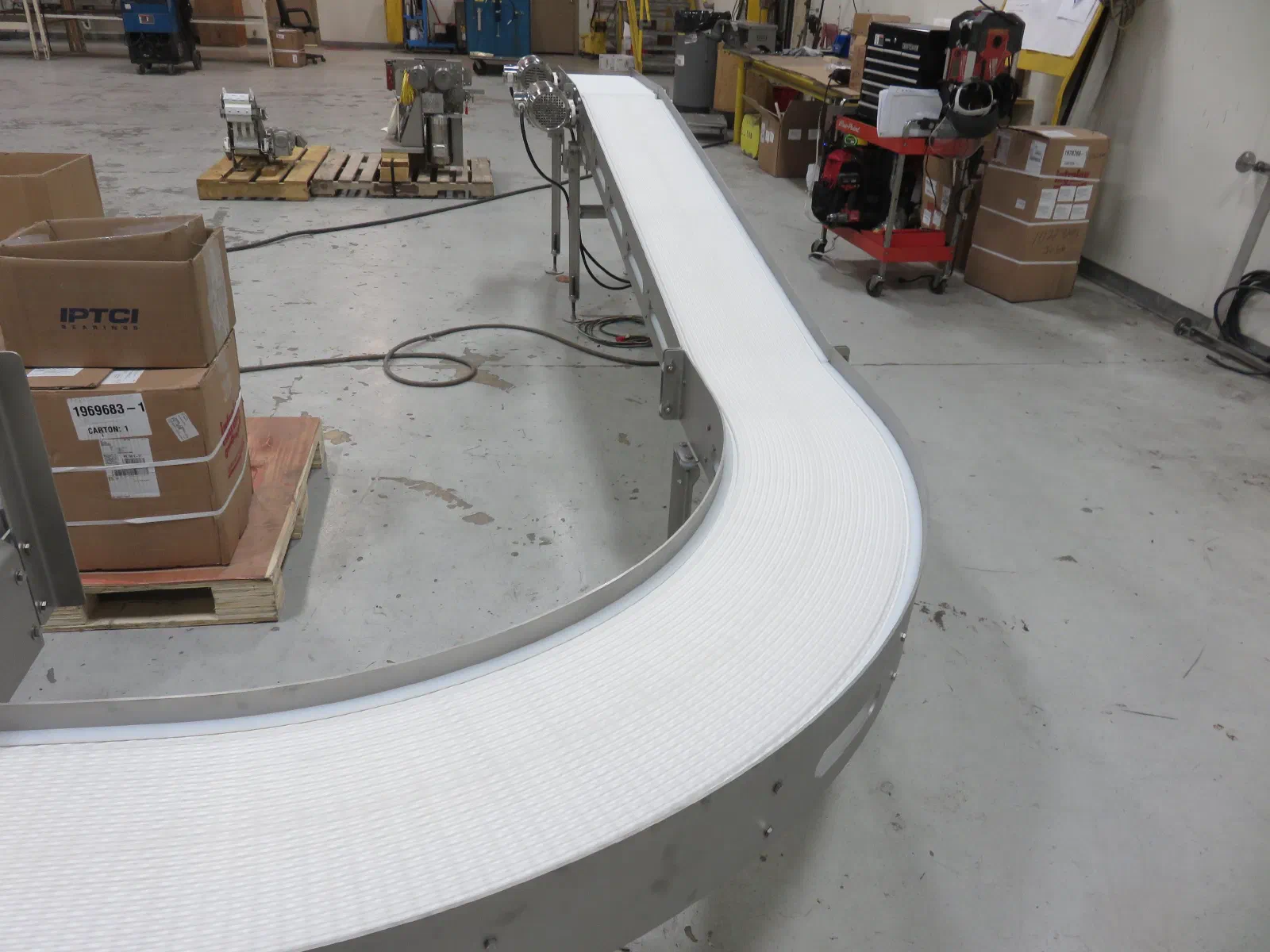
NMerging two lanes of filled pet food bags into one evenly spaced stream for a check-weigher and X-ray, using only belt speeds.
- Employer
- CHL Systems
- Role
- Design Engineer
- Industry
- Pet food
- Period
- 2020
- Scale
- Two lanes merged to one, three coordinated belt speeds up to 146 ft/min
The problem
A bagging machine discharges filled pet food bags in two lanes, but the check-weigher and X-ray downstream need them one at a time in a single lane, with a guaranteed gap between bags. A check-weigher has to see exactly one bag on its platform, and an X-ray needs clean separation to match each image to a bag. If two bags touch, the system either rejects both or passes something it never properly inspected, so the minimum gap is what makes the inspection valid. The engineering and design were mine, from the belt speed calculations to the stop and the conveyors.
How the gaps are made
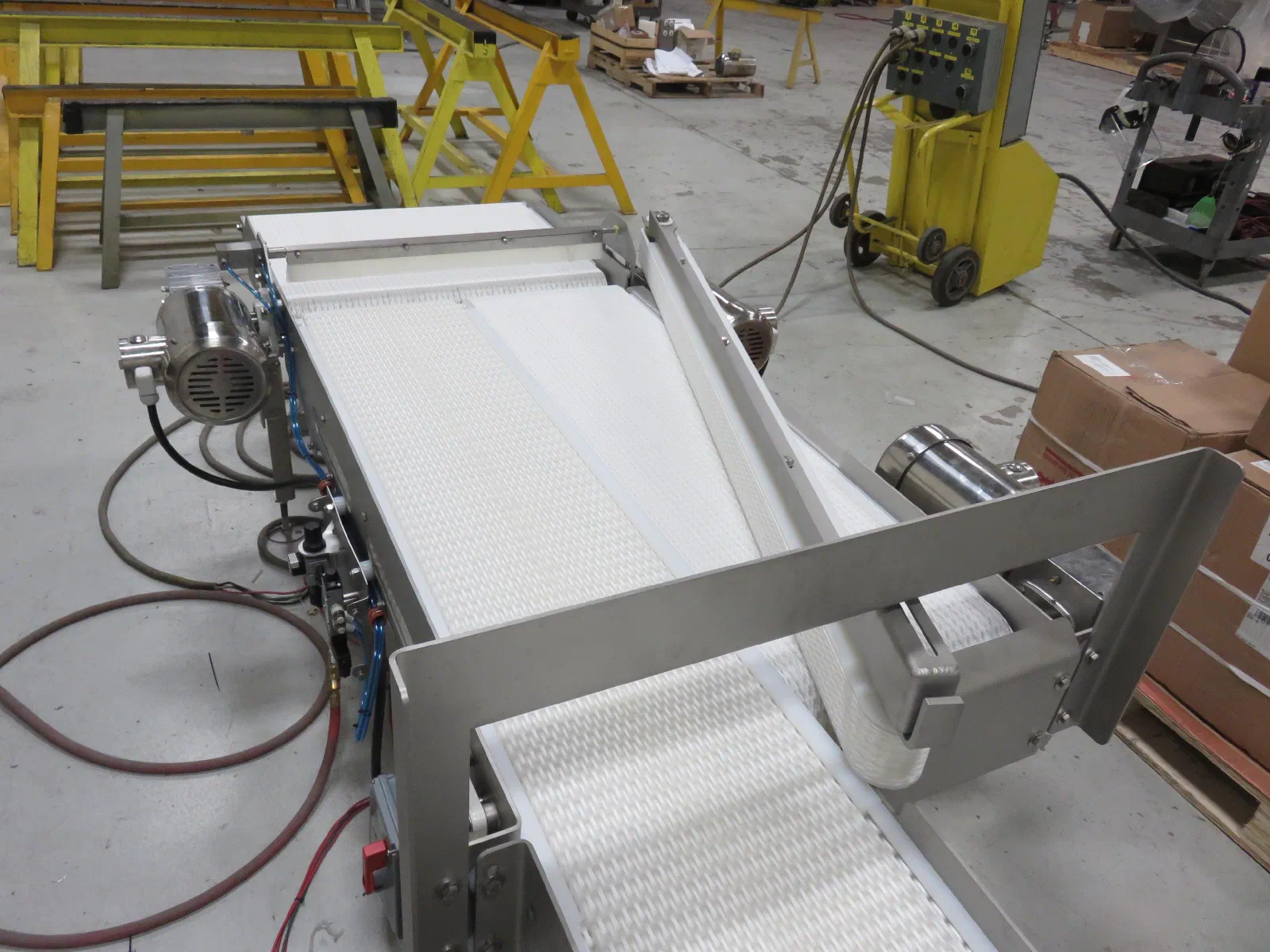
The system creates the spacing in two steps. First, a cylinder-actuated stop holds the bags and releases them, squaring up both lanes into an even, aligned front. Starting from a known arrangement is what makes the next step predictable.
Then the belt speeds do the work. The conveyors have calculated maximum speeds of 87, 123, and 146 ft/min, and each time a bag moves onto a faster belt, it pulls away from the one behind it. Across the run, those speed changes turn two aligned lanes into one evenly spaced stream. Nothing pushes the bags apart, so there’s no mechanism to jam, wear out, or damage a filled bag.
The stop
A metal stop dropping into the path of moving product would have created a pinch point next to where people work. I tested several materials and chose industrial brush, which is stiff enough to stop a filled bag and hold it square without becoming a trap. It’s also readily available and easy to replace, which matters for a wear part in a washdown environment. The conveyors themselves use modular plastic belts on stainless frames, with pneumatic disconnects for cleaning access.
What I learned
Choosing the brush material removed the pinch point, which was cheaper and more reliable than guarding a metal stop.
Specific skills
- SolidWorks
- collaboration with in-house machine and weld shops
- two-lane to single-lane singulation
- belt speed differential for controlled gapping
- designing to inspection equipment requirements
- pneumatic stop and release mechanisms
- modular belt selection